Family SPHINGIDAE
Subfamily Sphinginae
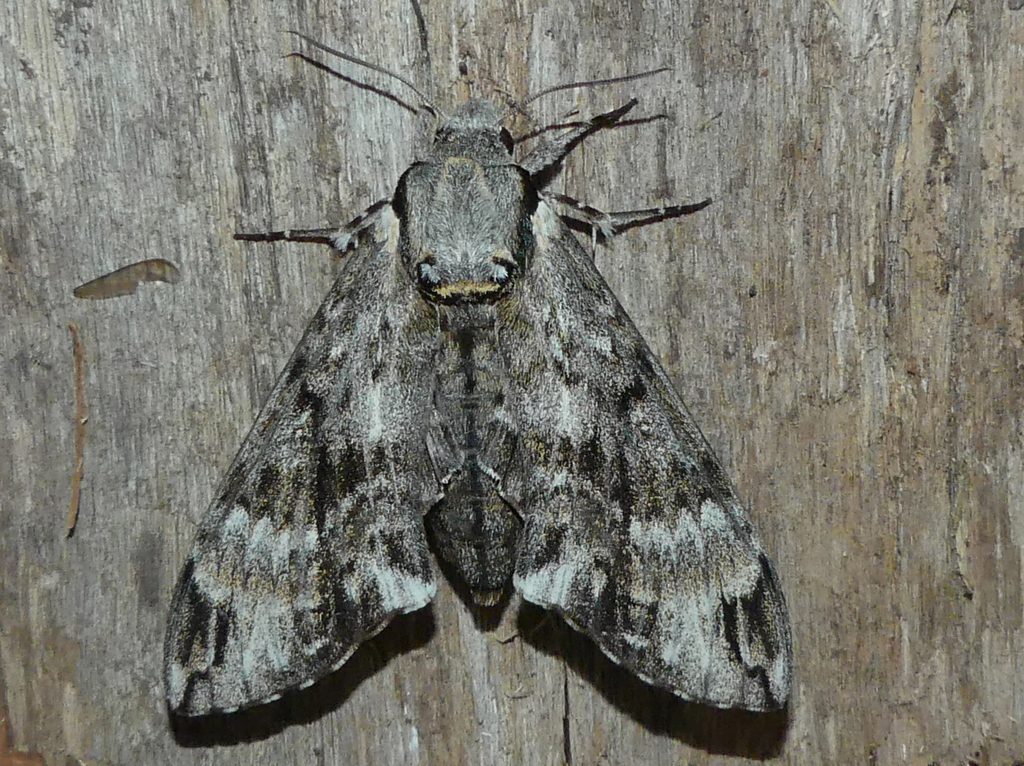
We have sighted three Psilogrammas here at Claire Cottage. In addition to Psilogramma maxmouldsi we have also sighted Psilogramma casuarinae and Psilogramma menephron nebulosa. All three Psilogrammas look identical to the casual observer with care needed to correctly identify each of them.
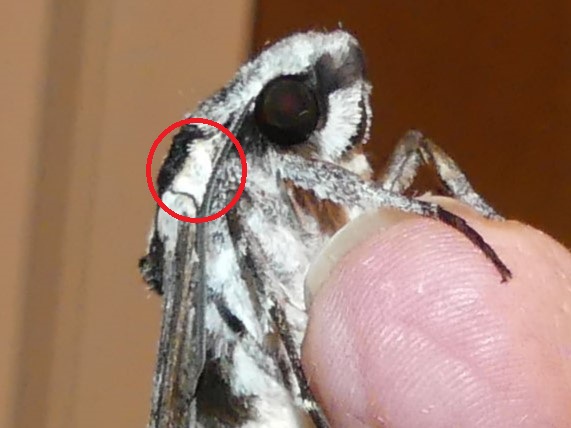
Accurate identification of a Psilogramma maxmouldsi requires confirmation that the ‘white thoracic shoulder’, as portrayed within the highlighted red-circle in the close-up photo above, is present on the moth photographed.
In the photo above the ‘white thoracic shoulder’ begins above the fine wavy dark line visible inside and towards the bottom of the red circle. That wavy line indicates the edge of the wing base. To aid accurate identification have your moth sitting high on a finger or a small object, such as is shown in the photograph above, so as to enable a photograph of the head and thorax from the underside. This will clearly display the colour of the thoracic shoulder and if white identifies the moth as Psilogramma maxmouldsi.
Other identification aids for Psilogramma maxmouldsi are listed here.
Forewing base colour – pale GREY overlaid with WHITE markings / heavily marked also with BLACK or BROWN markings. Forewing Discal spots – if present – GREY inside a BLACK circular edge. Forewing Tornal patch – usually BLACK and WHITE. Forewing Checkered outer fringe – not a means of identification for this species. Thorax GREY usually light, occasionally dark, displaying an inverted U or V shaped marking. Abdomen darker GREY than thorax.


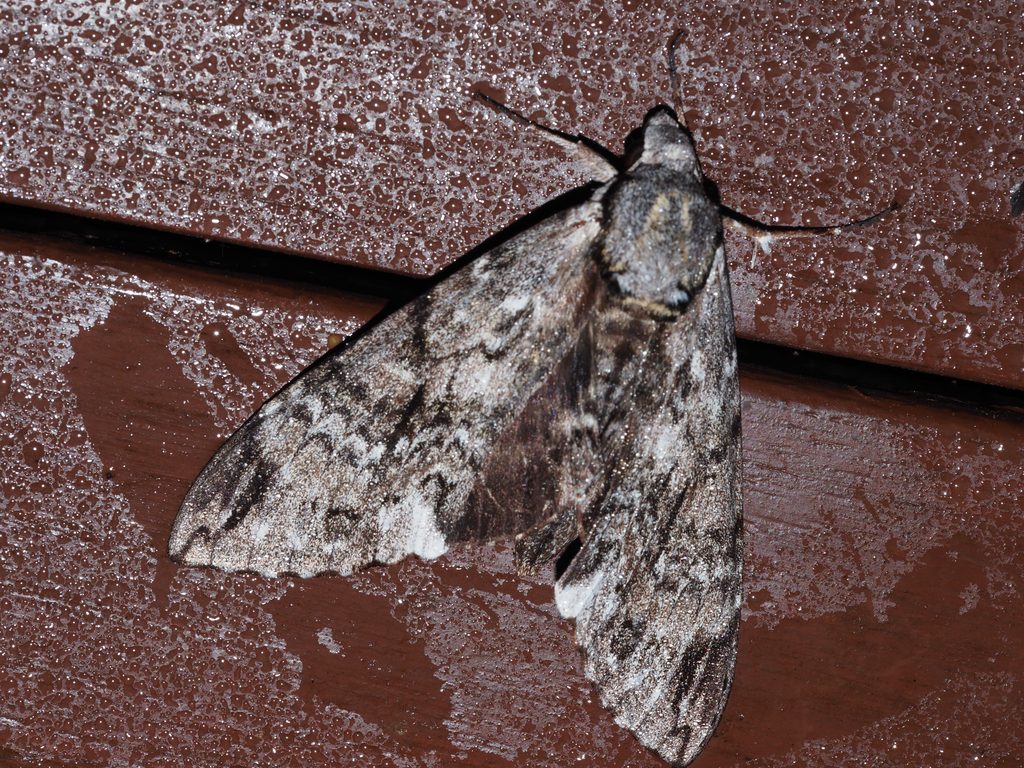
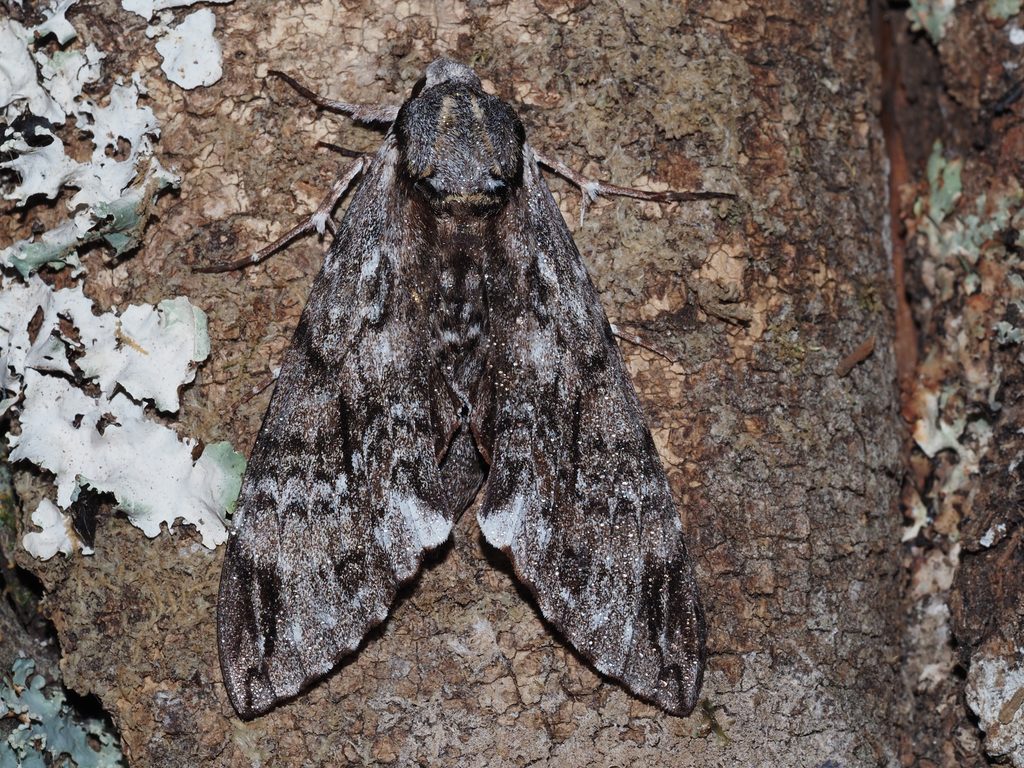
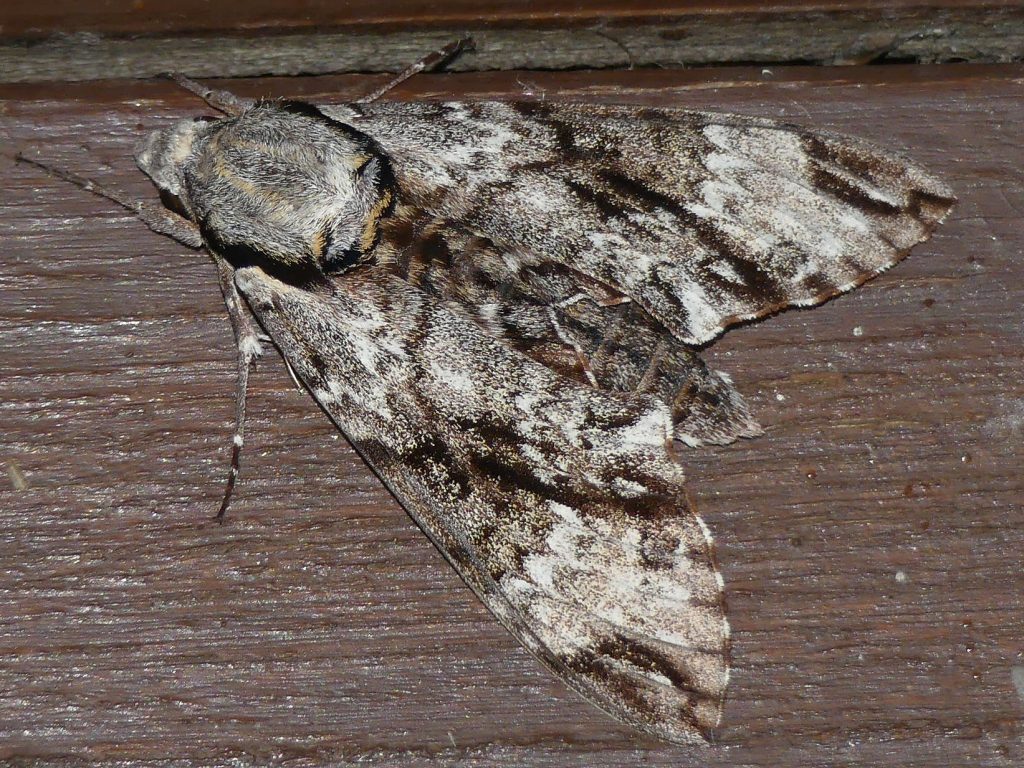
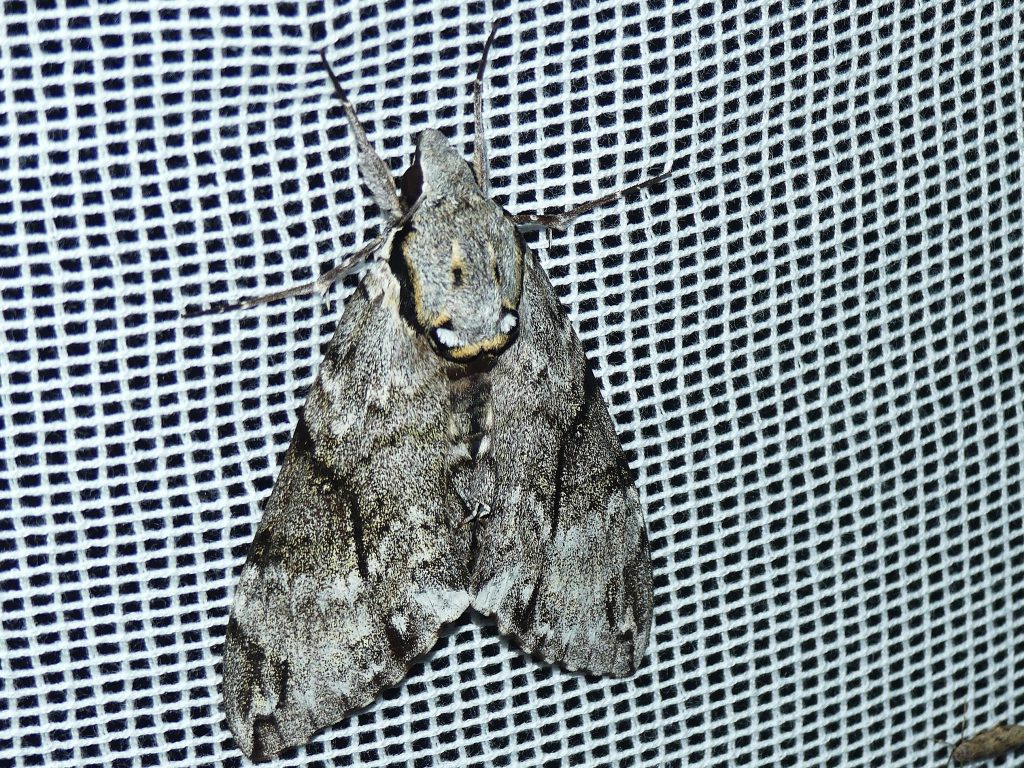
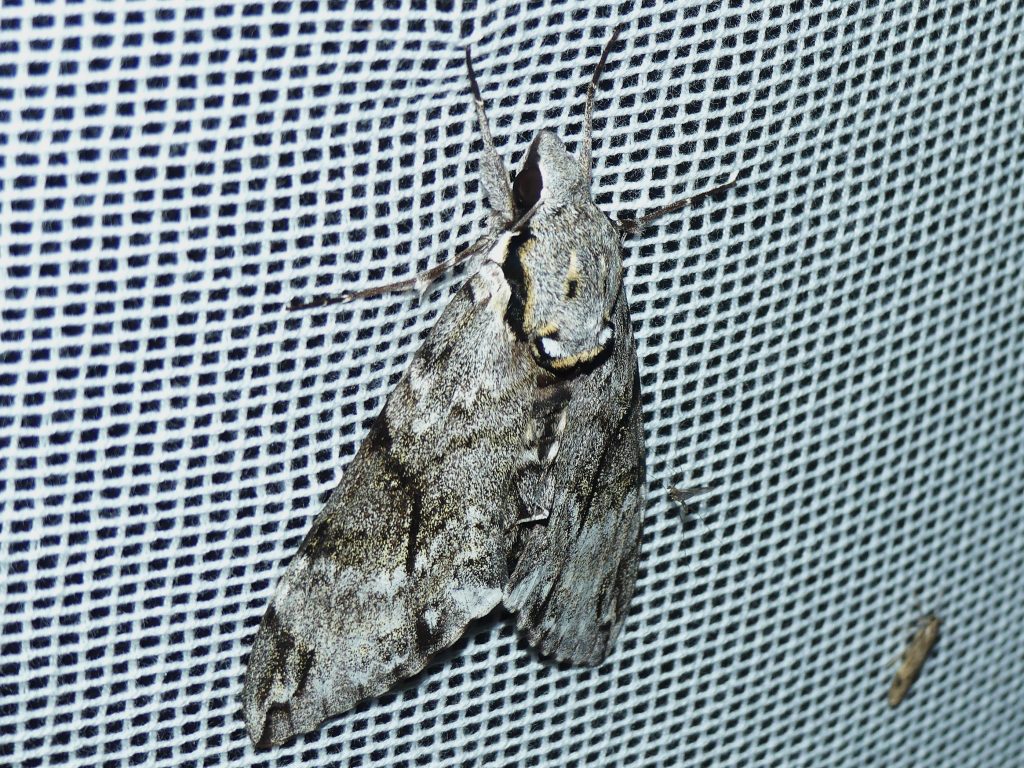
Psilogramma maxmouldsi occurs in Queensland from Miriam Vale south into New South Wales then south to Wingham. We have seen this moth in October and November.
Its only known foodplant is Clerodendrum floribundum, LAMIACEAE.