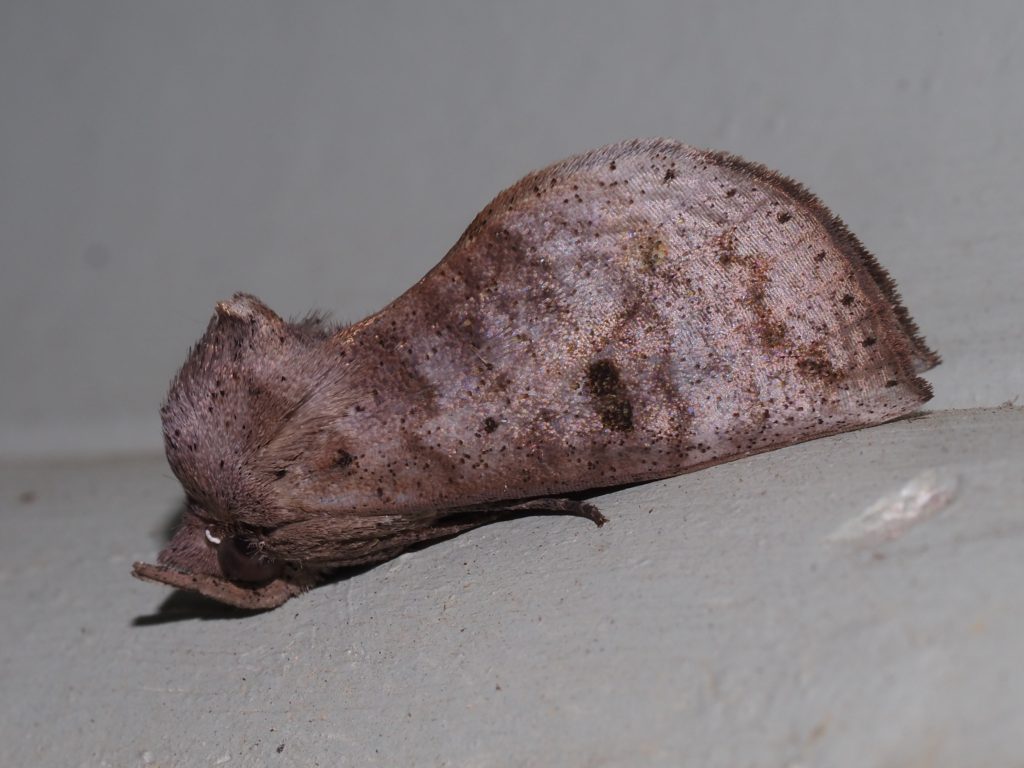
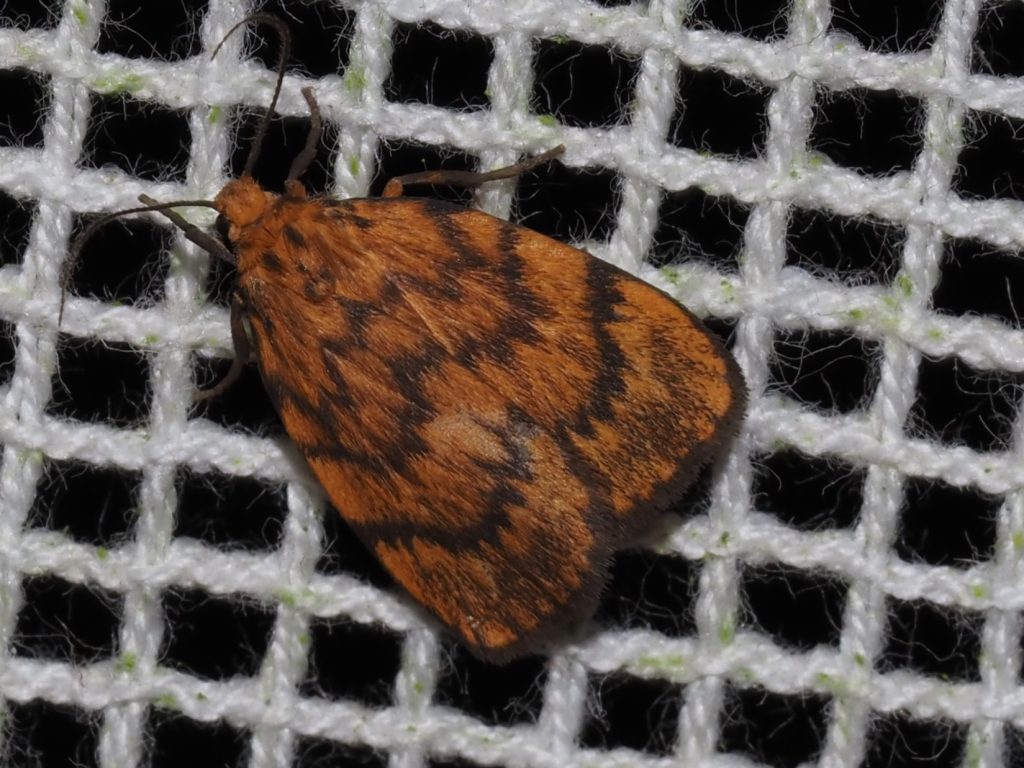
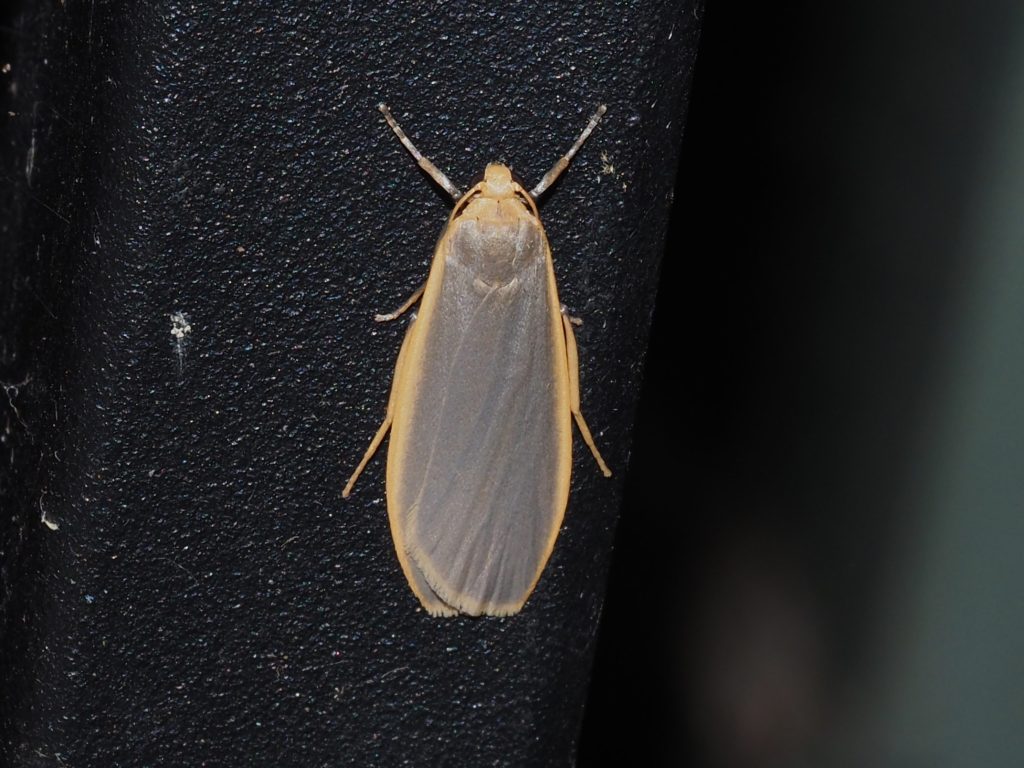
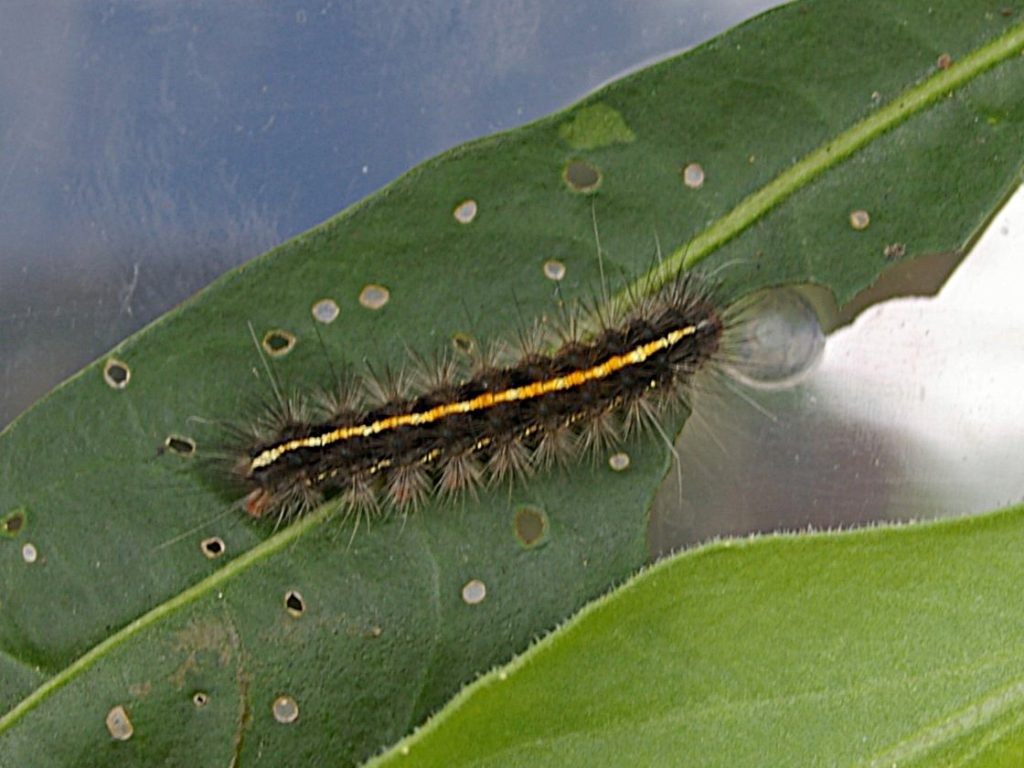
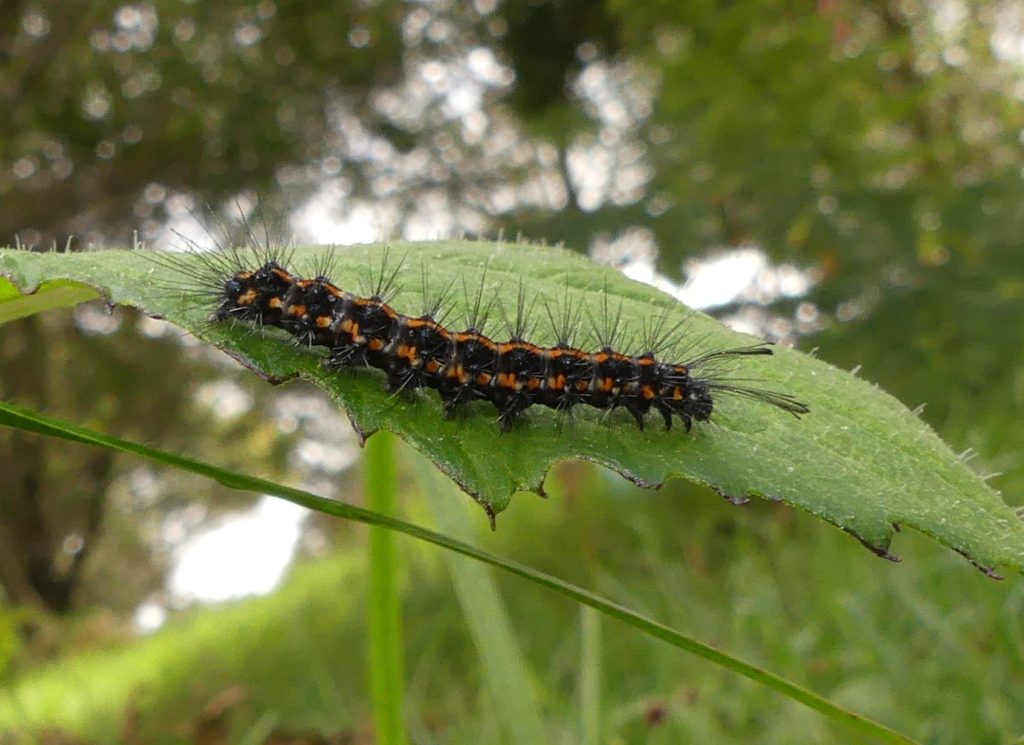
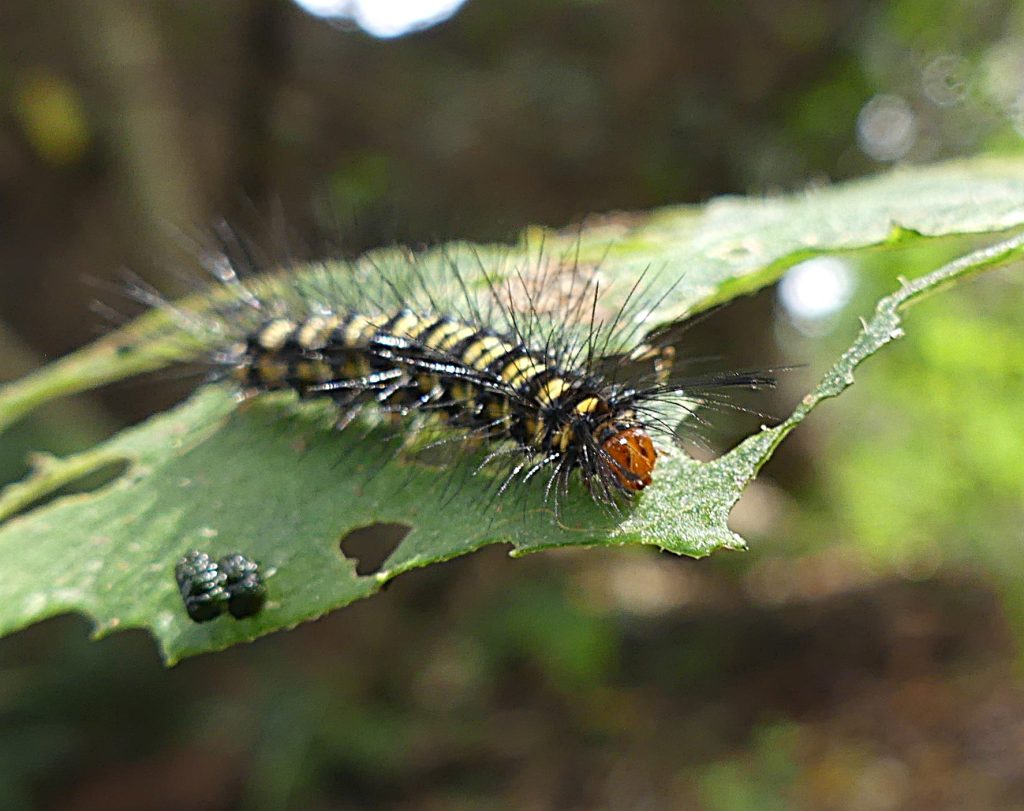
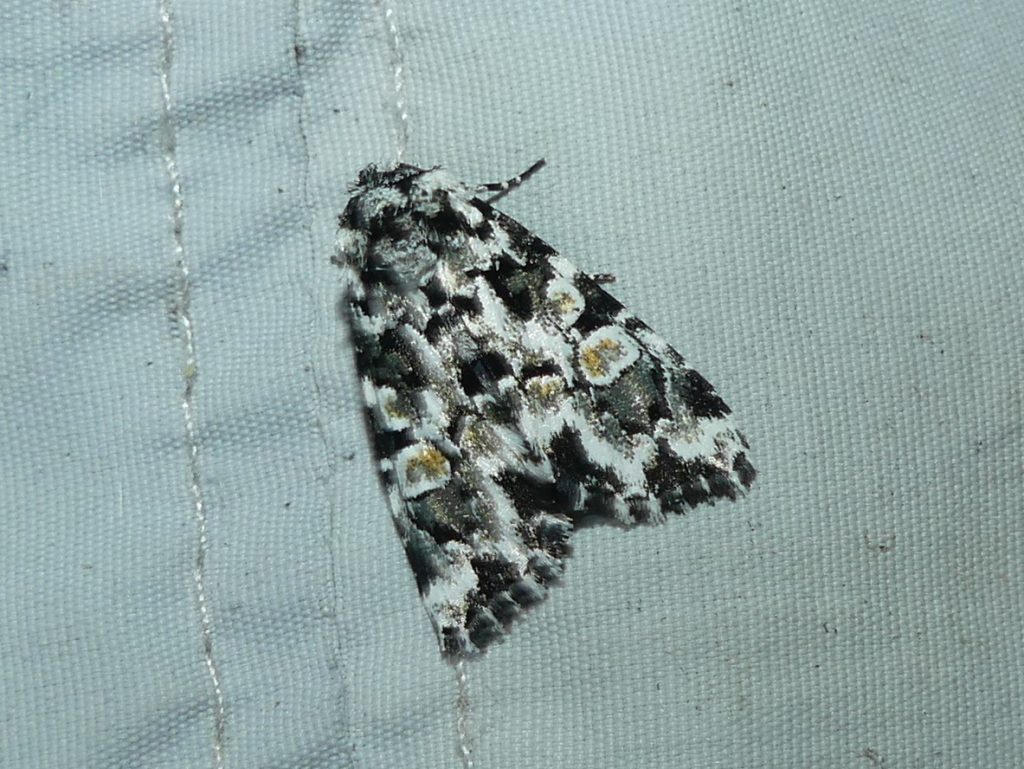
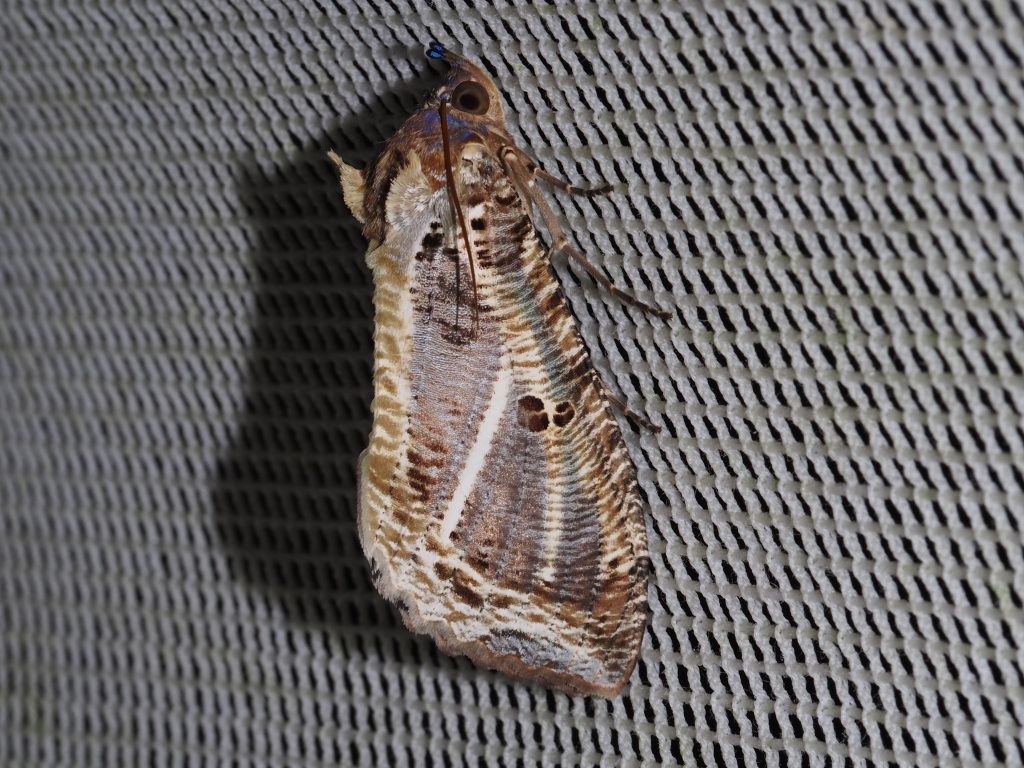
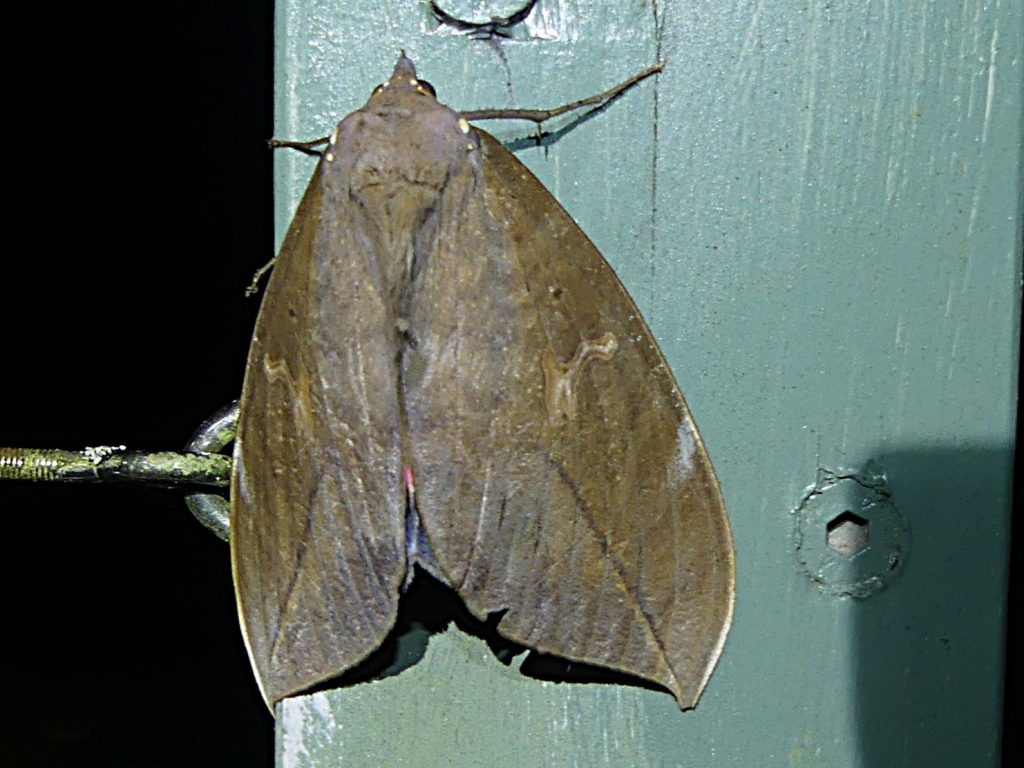
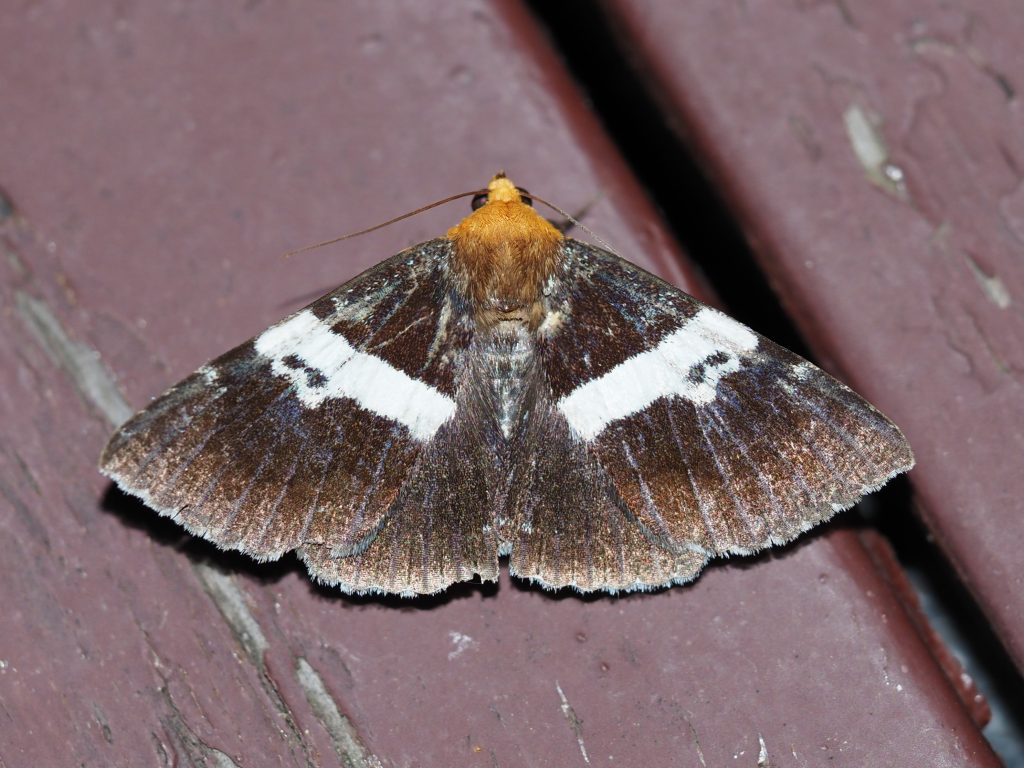
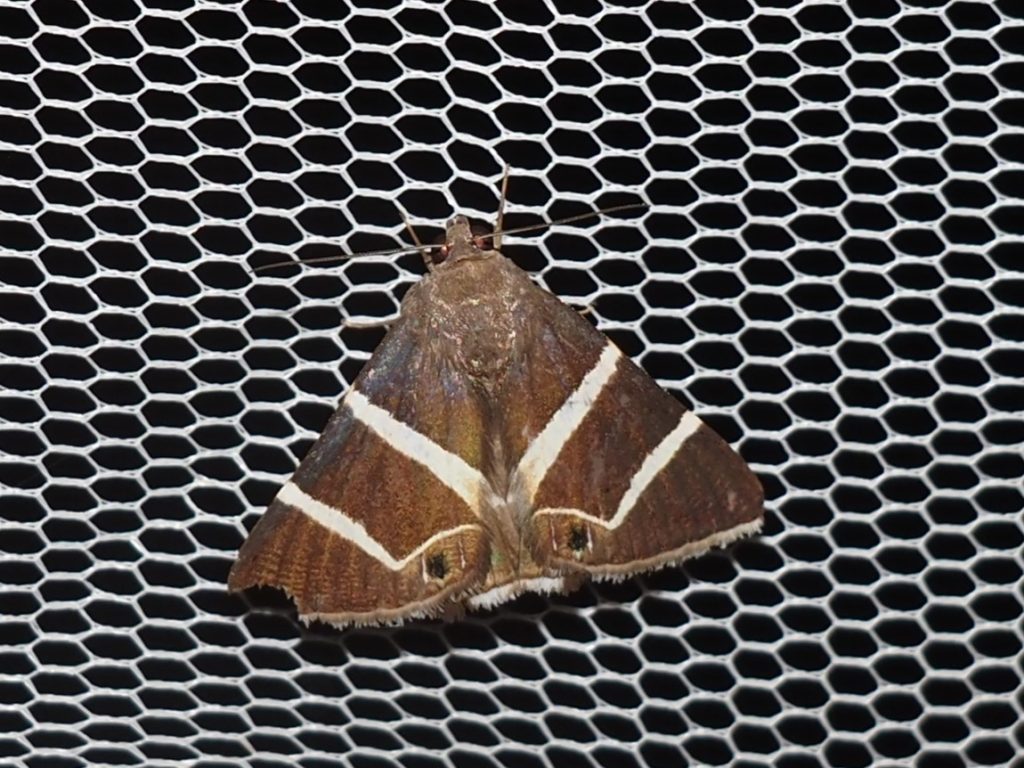
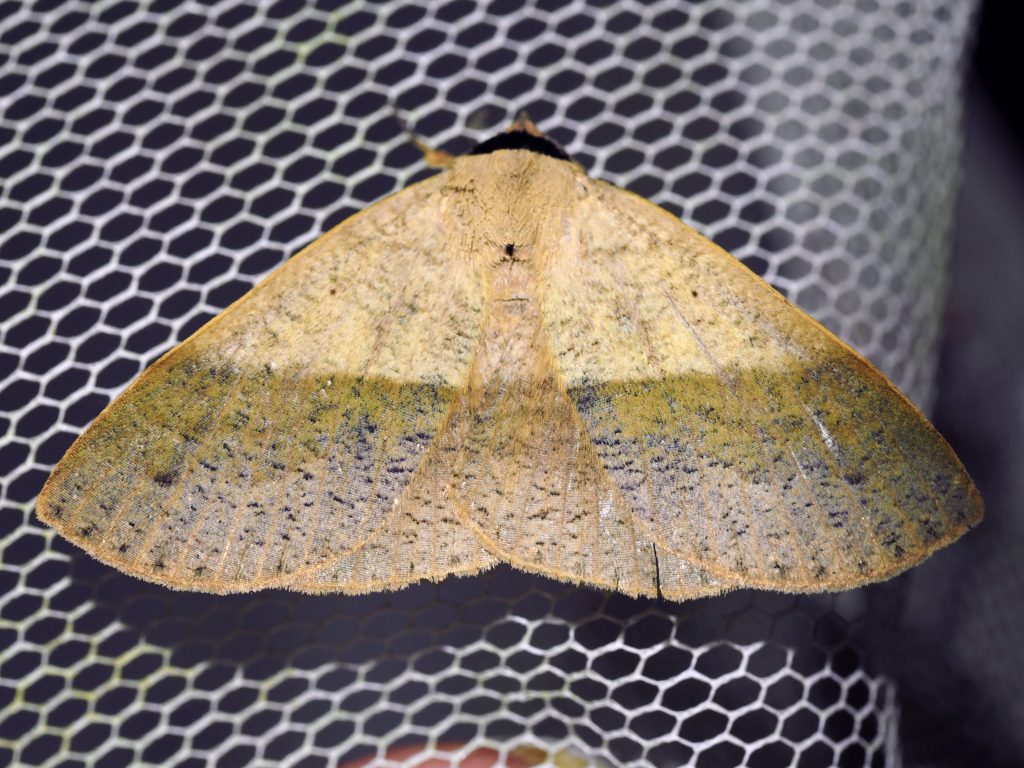
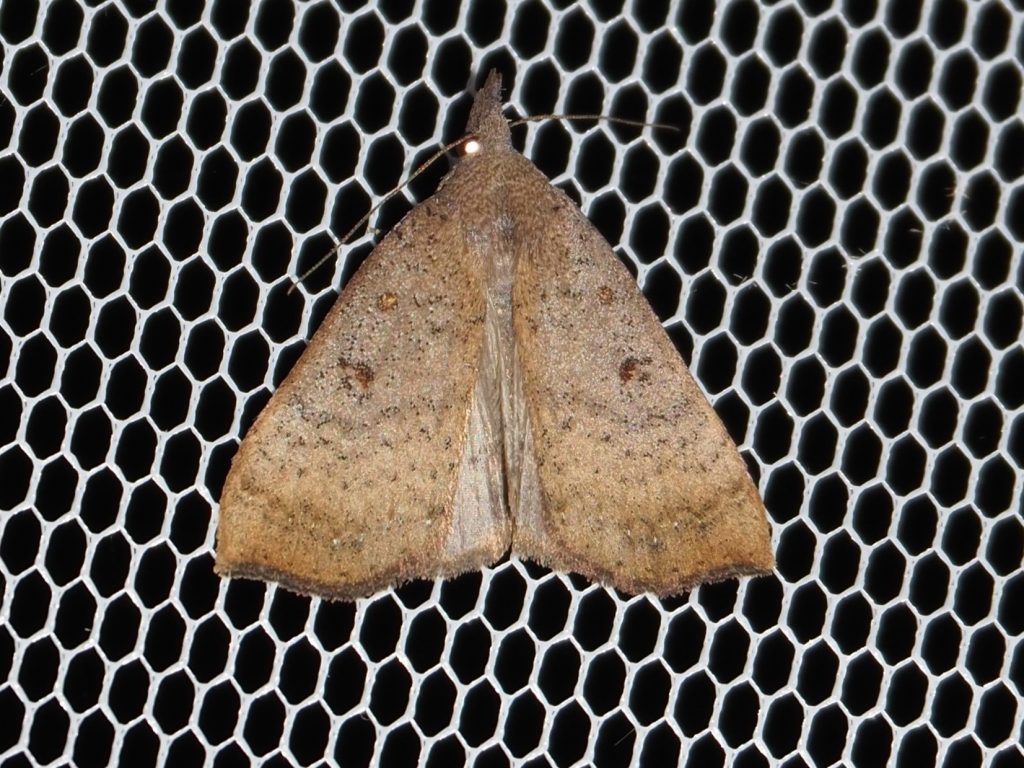
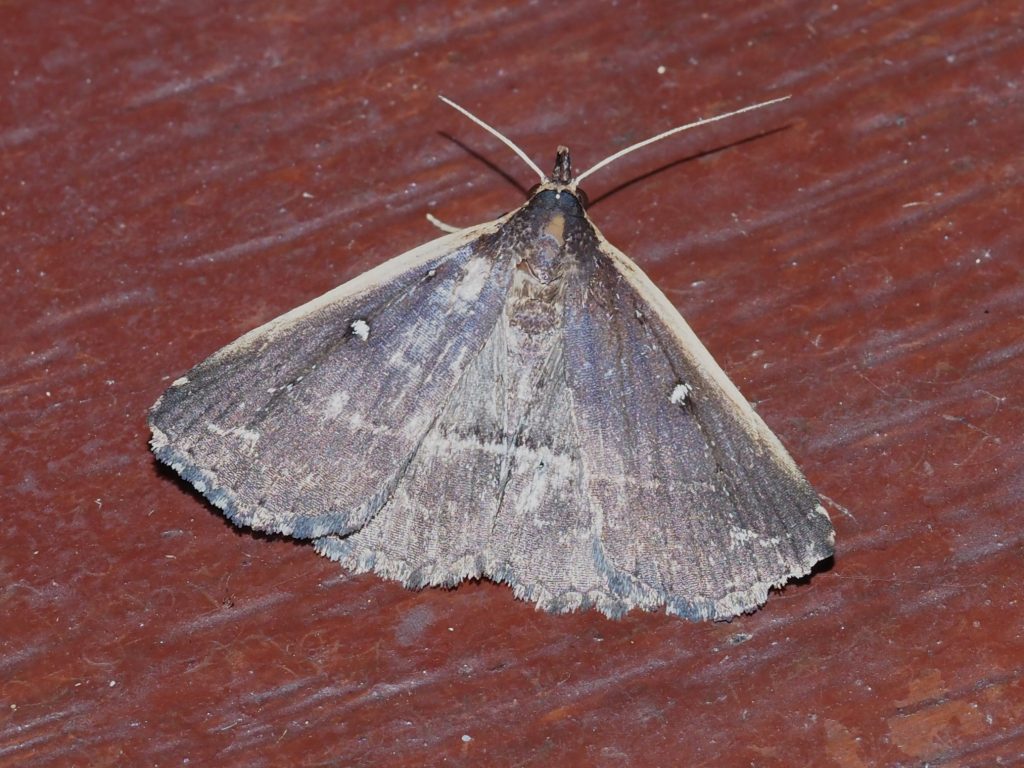
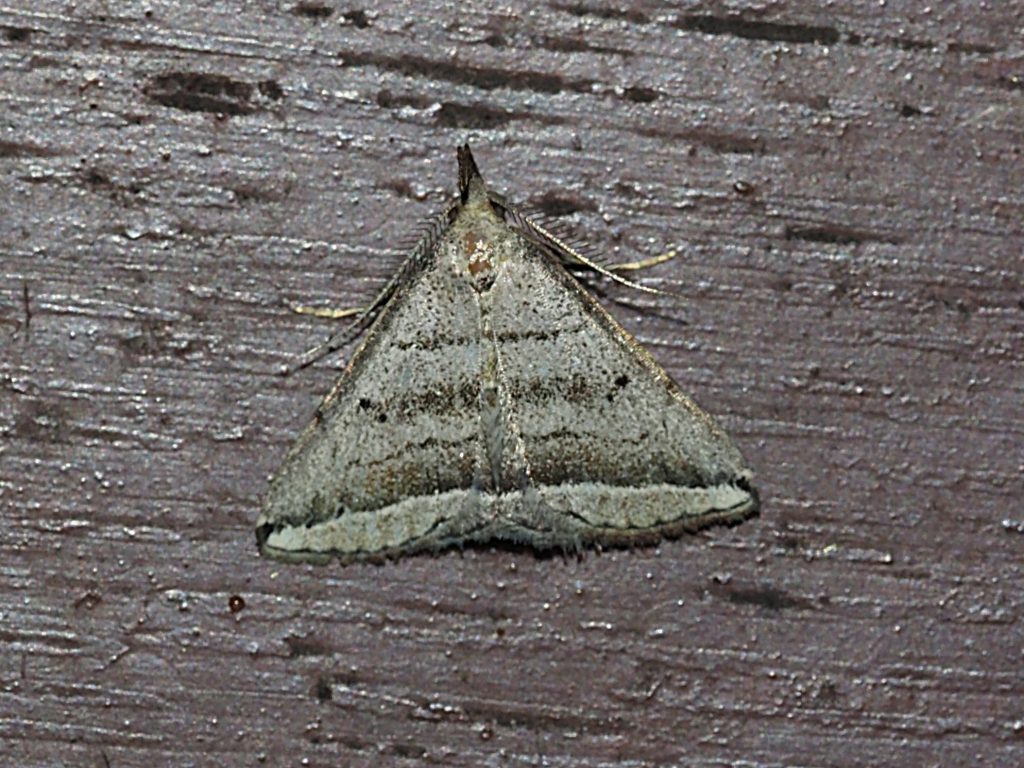
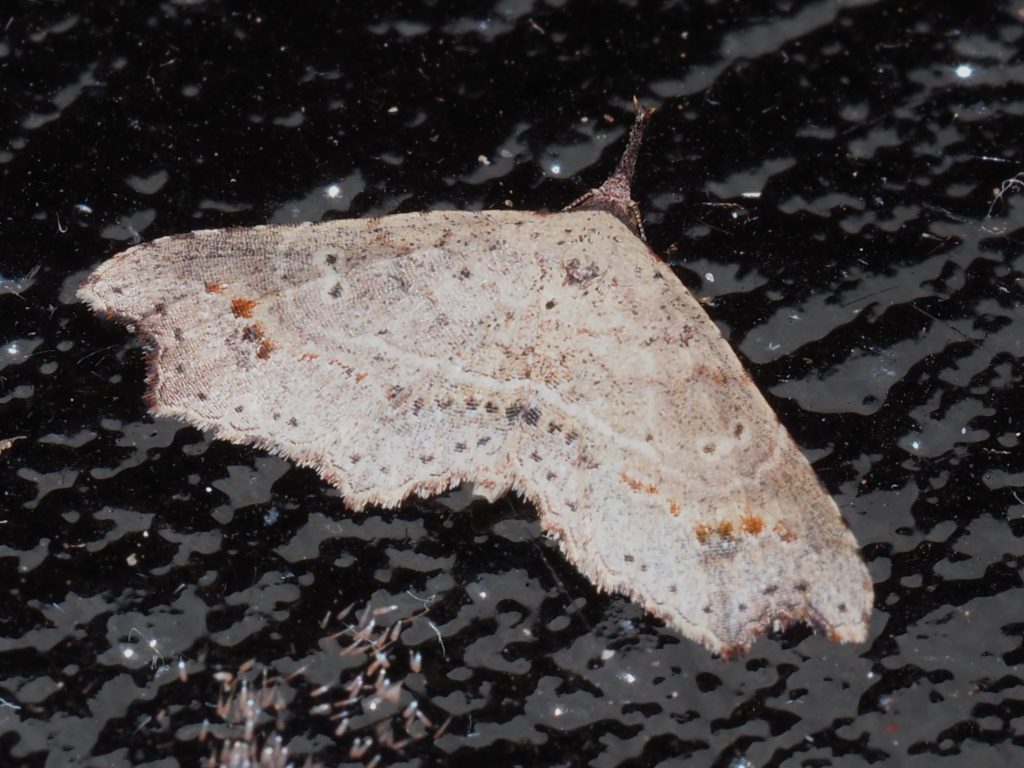
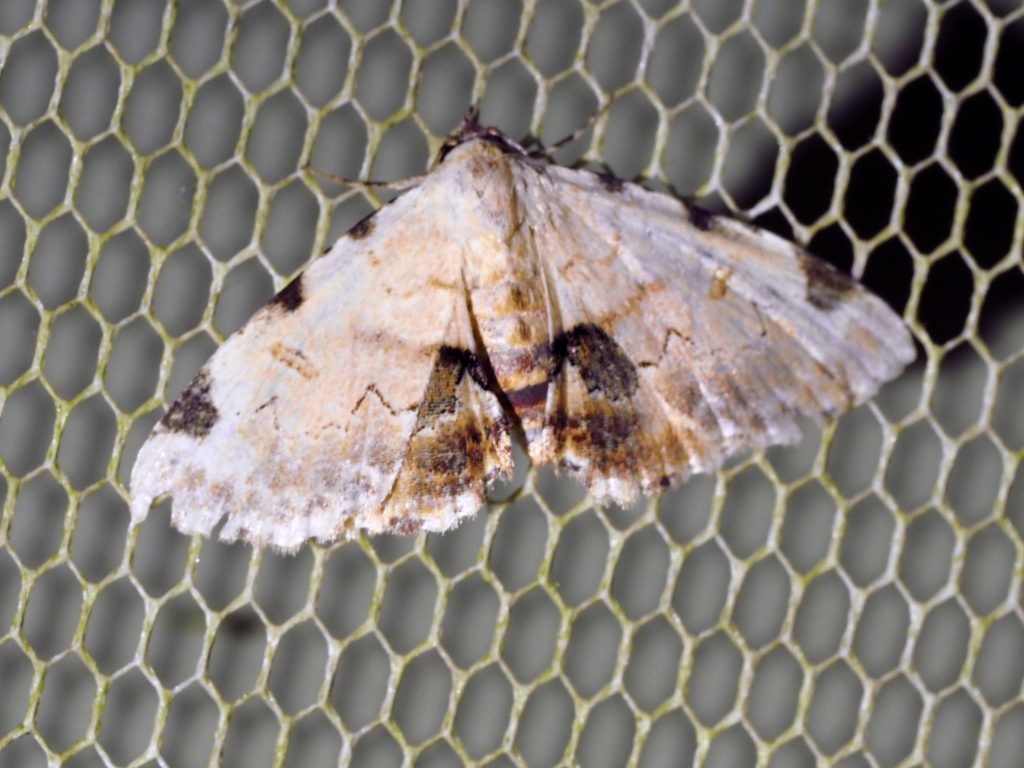
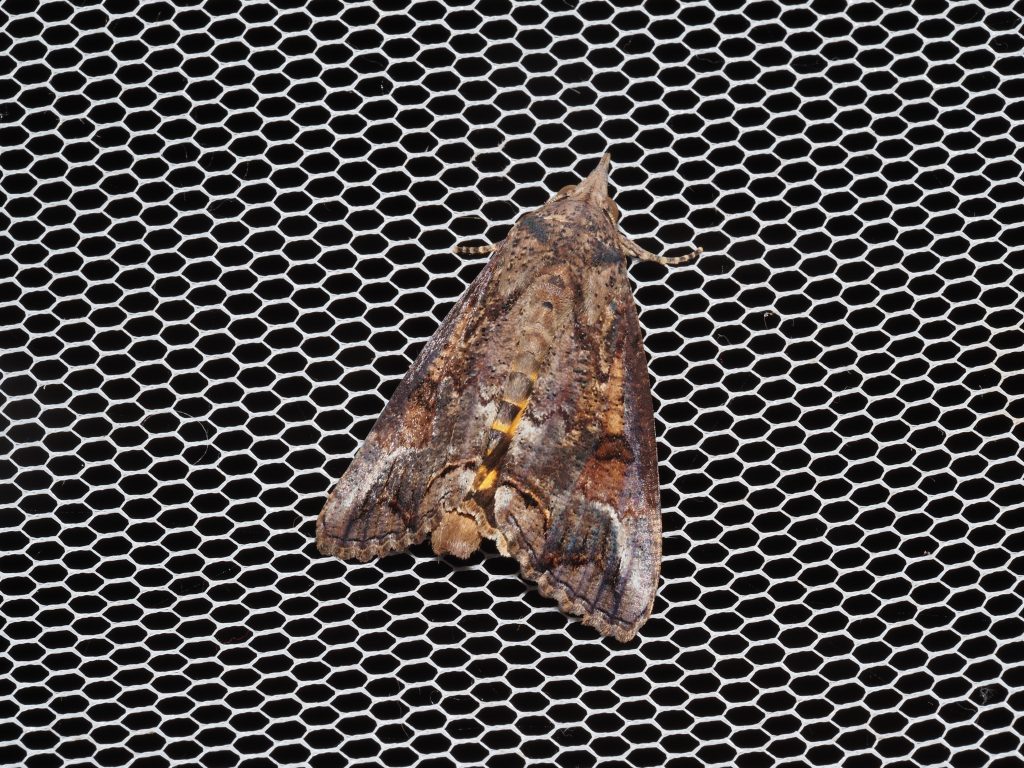
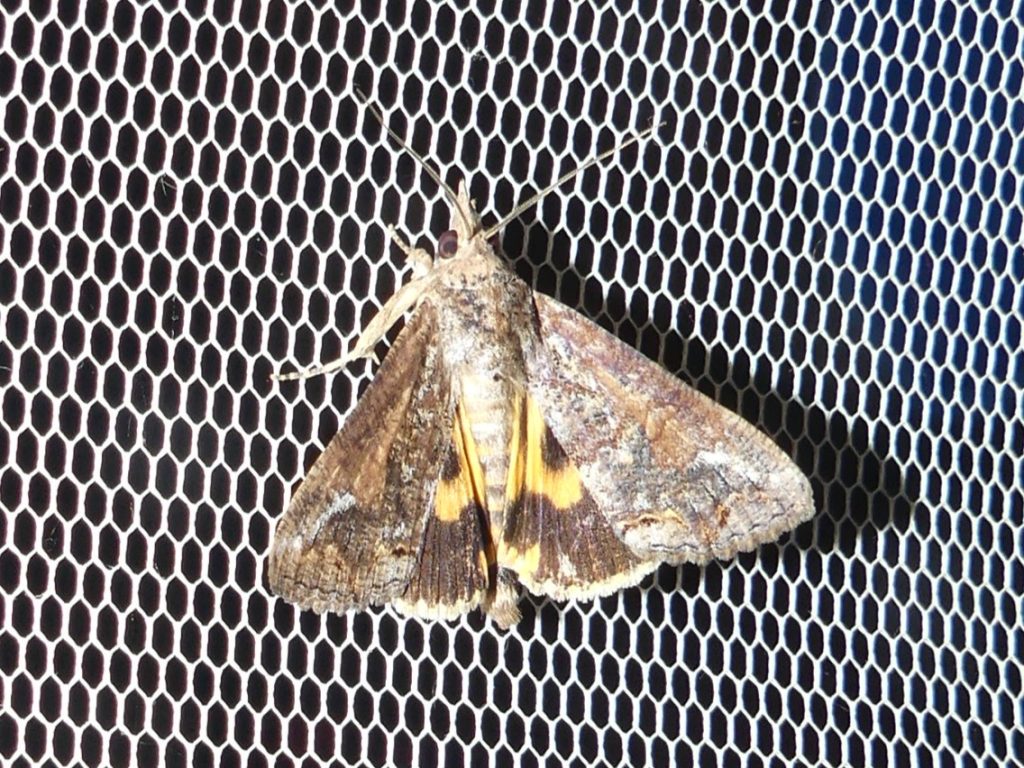
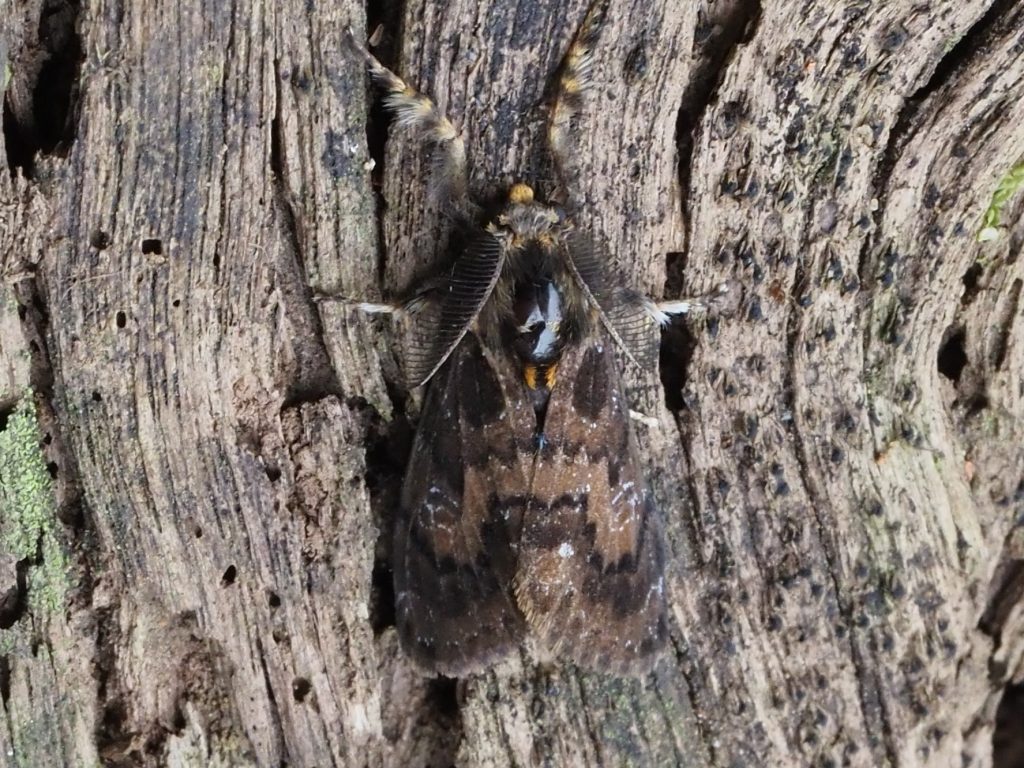
The adults and caterpillars of this subfamily are typically brightly coloured, like the related tiger moths. Many of the caterpillars feed on poisonous host plants and acquire toxic cardenolides that make them unpleasant to predators.
Asota iodamiaSommeria marmorea
Subfamily Arctiinae
Tiger moths, wasp moths, footmen – Labial palpi usually short and upturned, proboscis often short or absent. The orange-yellow, red and black colours of many moths in this subfamily are a warning to predators that they are poisonous. Caterpillars are hairy and, when disturbed, roll into a spiral. Also, when disturbed, some emit a pungent secretion.
Caterpillars are usually smooth, lacking obvious hairs. Many have one or more pairs of prolegs missing so move in a looping fashion.
Some of the adult moths have brightly coloured hind wings which are normally covered. Some are considered pests which puncture fruit in order to feed on the juice.
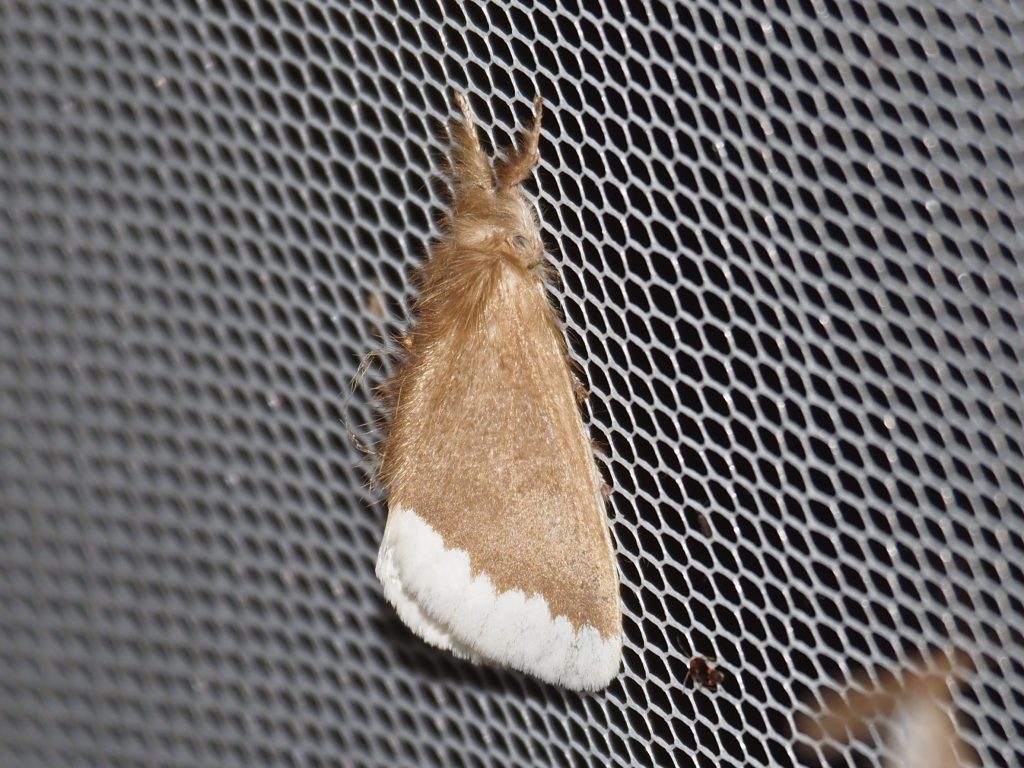
Known as Tussock Moths because the caterpillars of many species have four long dense dorsal tufts of hair. Many also have other hair pencils, and also two coloured dorsal glands on abdominal segments six and seven. Many of the caterpillars attack cultivated plants and the hairs of some can cause skin irritation. Caterpillars can be very colourful.
Pupation is in a cocoon constructed of larval hairs.
Adult moths do not feed so are short-lived. In some species the females are wingless as in Orgyia anartoides that we have seen here.
Acyphas chionitis♀Acyphas chionitis♂Calliteara pura♀Calliteara pura male ♂Dura genus ♀Dura genus ♂Euproctis croceaEuproctis speciesLaelia obsoletaLymantria nephrographa♀Lymantria nephrographa♂Orgyia anartoides♀Orgyia anartoides♂Urocoma baliolalisUrocoma marginalis
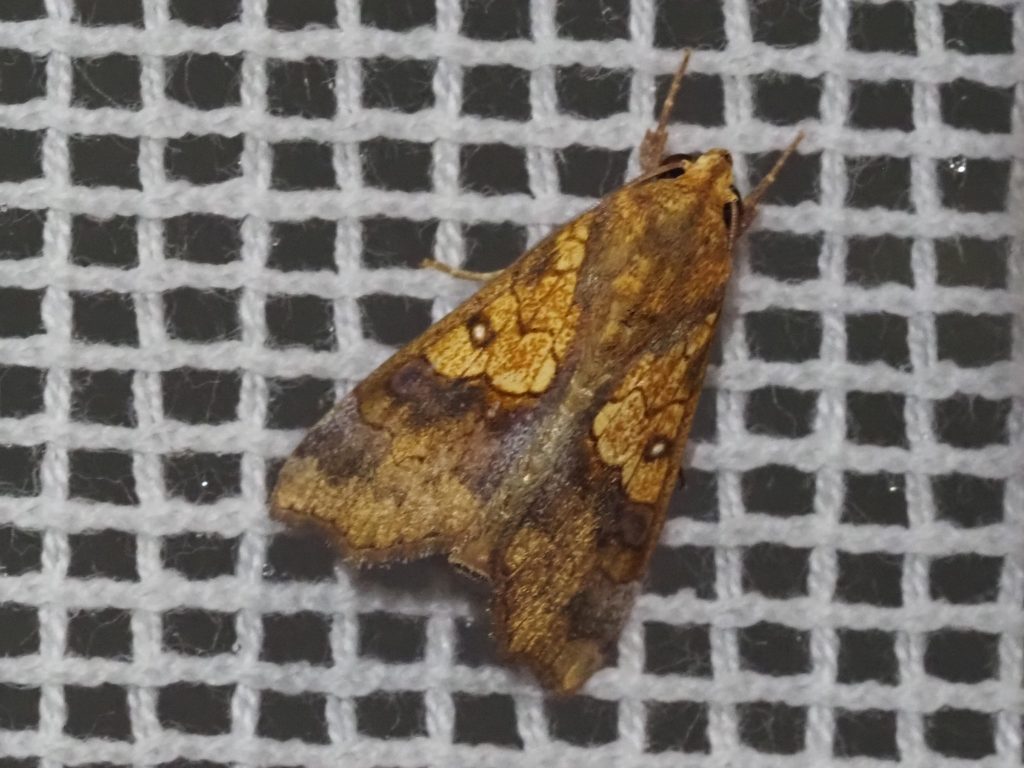
Subfamily Scoliopteryginae
Caterpillars have extra setae (hairs/bristles) on the first to seventh abdominal segments. Many adult moths are fruit piercers.